
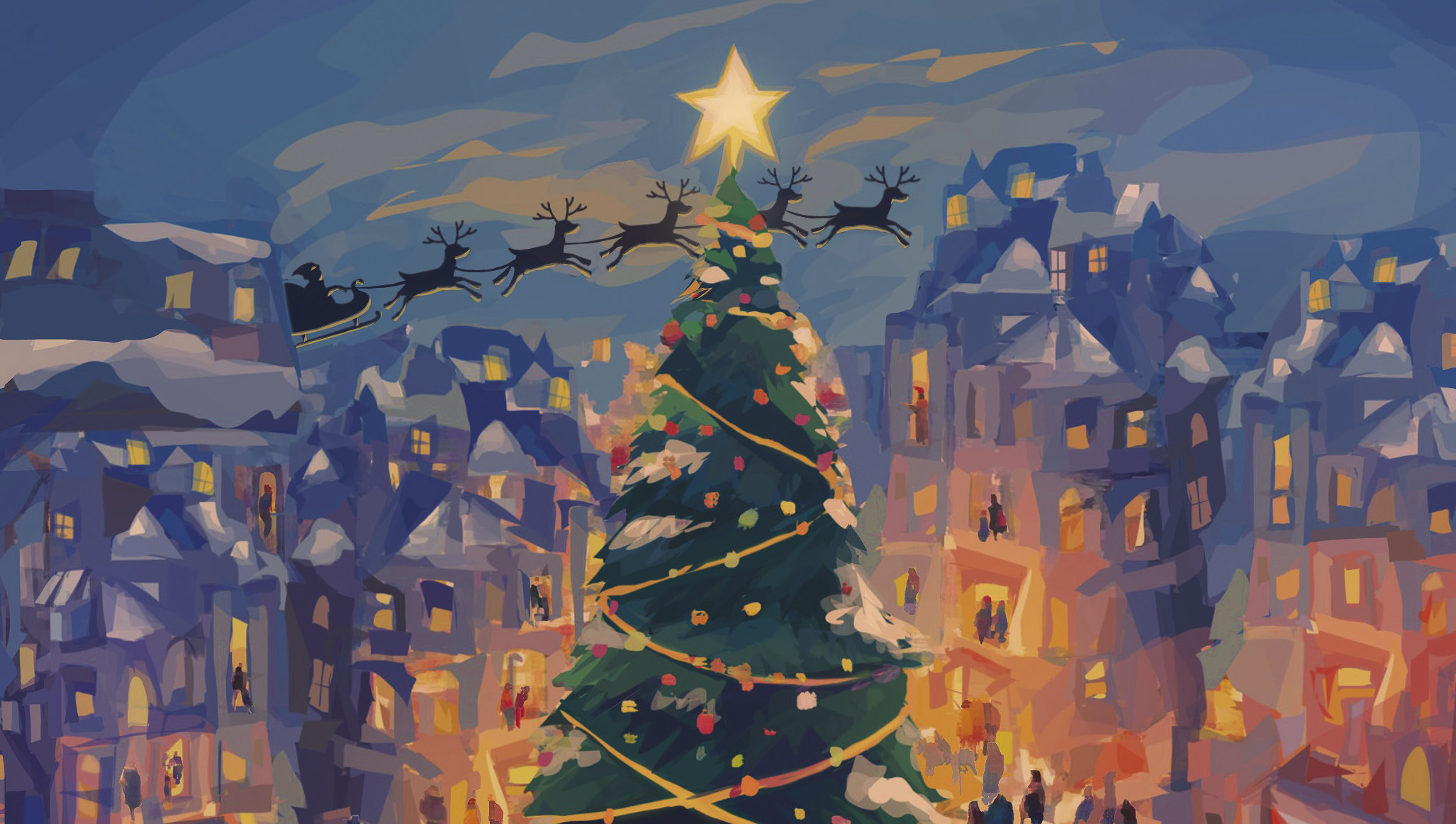
There is no shortage of Christmas traditions in Fountain Valley and Huntington Beach in December.
For example, in Huntington Beach, the annual weeklong Cruise of Lights brightens Huntington Harbour, as does the two-day boat parade, in which local boat owners decorate their boats and yachts and cruise through the harbor.
On land, the Living Nativity drive-thru at First Christian Church is an annual event that recounts the nativity and includes sheep, goats and even camels. The drive-thru takes place in the church parking lot.
Fountain Valley traditionally holds its annual Tree Lighting Ceremony on the first Saturday of December at the Fountain Valley Sports Park. There’s live entertainment, crafts, games, pictures with Santa, a Snow Zone and food booths.
Also popular is the Fountain Valley Historical Society’s annual Christmas in the Gazebo in the city’s historic Heritage Park. The event, generally held on the second Saturday of the month, features plenty of local entertainment, vendor booths, a visit from Santa and more.
There are also hundreds of Christmas events throughout Orange and Los Angeles counties. Here’s a small sampling: The 92nd Annual Hollywood Christmas Parade on Dec. 1 The Belmont Shore Christmas Parade on Dec. 7 The Dana Point Harbor Boat Parade of Lights on Dec. 14-15.
Luminaria Nights at the California Botanic Garden on Dec. 13-14 and Dec. 20-21.
Winter Lights Holiday Musical at Discovery Cube Orange County Dec 14-23.
But do you ever wonder how the rest of the world celebrates Christmas? Here’s a glance at other countries’ Christmas traditions.
ICELAND
On Christmas Eve, it is a tradition for Icelandic families to exchange books. They then spend the rest of the evening in front of a cozy fire, reading aloud and enjoying lots of sweets. Additionally, the “Yule Lads,” 13 mysterious troll figures, appear during the holiday season. The Yule Lads have been described as anything but saints. Rather, they are “pranksters” and “rascals” with names like Spoon Licker, Door Slammer and Sausage Stealer. Each of the 13 nights before Christmas, one Yule Lad will come down from their mountain cave to bring small gifts – usually toys or candy -- to children who have placed a shoe on their windowsill. But children with room for improvement can expect a rotten potato.
ITALY
On Jan. 5 throughout Italy, children await a late-night visit from La Befana by hanging up socks to be filled with small delights. Befana has been described as a grandmotherly and kindly witch. Folklore says she brings gifts to good children, depositing them in stockings hung above the hearth. Befana arrives after children have gone to bed on the eve of the Festa dell’Epifania (Feast of Epiphany), a celebration of the visit of the Magi to the newborn Christ child in Bethlehem.
Ethiopians follow the Julian calendar, which means they celebrate Christmas on Jan. 7. On Christmas Eve, Ethiopian Christians attend an overnight church service, usually starting around 6 p.m. and ending at 3 a.m. People line up and begin a long procession that circles their church.
On Christmas Day, people dress in white, with most wearing a traditional netela – a handmade cotton shawl.
VIETNAM
Common decorations for major holidays in Vietnam, such as the Lunar New Year and Mid-Autumn Festival, include lanterns made of bamboo and paper. The light within the lanterns represents the festive celebrations. For Christmas, the lanterns take the shape of a star and are hung in front of houses and on top of Christmas trees.
Due to French influence, after midnight service, Vietnamese families may also gather for a family dinner called Réveillon. The highlight of the meal is a special dessert called the Bûche de Noël , a logshaped traditional yellow sponge cake.
The outside textures are decorated to resemble bark and a snowy wintertime.
GERMANY
In the 19th century, German Protestants would count down the days leading up to Christmas by making 24 chalk lines on walls or doors and rubbing one off every day in December to celebrate Advent, the four-week season of remembering the arrival of Jesus on Earth.
COLUMBIA
On Dec. 7, Colombia honors Mary, the mother of Jesus, during Noche de las Velitas (Night of the Little Candles).
Colombians light up their homes, yards and streets with colored candles in paper lanterns in honor of the Virgin Mary and her Immaculate Conception. The event has grown to include music, fireworks and food markets.
MEXICO
A Mexican legend tells of a poor girl named Pepita who had nothing but a bunch of weeds to offer the baby Jesus at a Christmas Eve service. When she began placing the weeds by the nativity, they turned into red flowers. Poinsettias, which bloom in winter, are indigenous to central America, specifically to southern Mexico. They are shaped like the star of Bethlehem. The red colored leaves are said to symbolize the blood of Christ, while the white leaves represent his purity.
GUATEMALA
At 6 p.m. every Dec. 7, Guatemalans “burn the devil,” building bonfires outside their homes to mark the occasion by setting a pinata shaped like a devil on fire. People gather in towns and villages across Guatemala for La Quema del Diablo (Burning of the Devil). Guatemalans believe that burning an effigy of the devil will cleanse their homes of evil.