
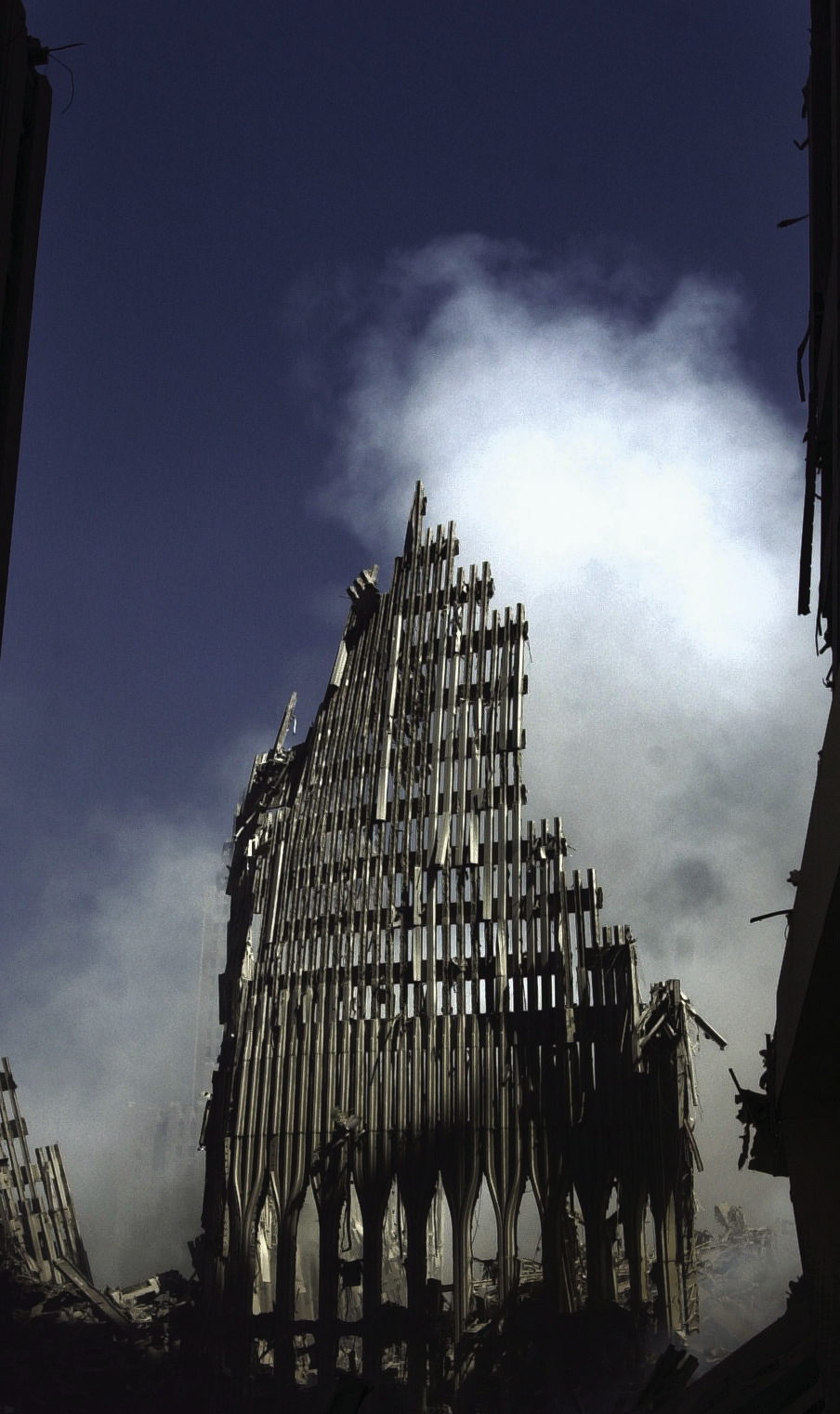
Like many of us, Huntington Beach resident Dave Badgett remembers exactly where he was when he learned about the shocking events of Sept. 11, 2001.
An assistant chief with the Los Angeles Fire Department, Badgett was listening to his car radio while driving to work. Unable to fathom what was really happening, he assumed the first plane to hit was a fluke accident.
Arriving at work, other LAFD members who had also been listening to the news joined Dave in his office where they watched on TV as a passenger jet plowed into the second Twin Tower.
“I knew I was headed for New York,” he said. Badgett served on Southern California’s Federal Emergency Management Agency team, which is drawn from local fire and police departments.
FEMA assigned Badgett to its Critical Incident Stress Management Team. “There was a desperate need for counselors,” he said.
Even as they dug through the towers’ ruins, New York firefighters, police offices and other first responders were grieving for lost colleagues and relatives.
Many sobbed openly: “Everywhere you looked you saw uniformed people crying,” Badgett said.
Badgett, too, occasionally had to step away to regain his composure.
“You got a sense of professional impotency,” he said. “It was like: ‘All my training, all my expertise, and there’s nothing I can do to fix this.’” Counselors set up spaces around what responders called “the Pile.”
“People who wear uniforms are very proud and don’t want to say, ‘I have a problem.’ They carry the load until they break, and then they break hard,” Badgett said. “Our job was to diffuse issues so people would not become suicidal.”
Indeed, the suicide rate among New York firefighters spiked after 9/11.
“I believe our team saved more lives than we would have on search and rescue,” Badgett said. “This wasn’t even a rescue operation. There were virtually no survivors.”
Firefighters on the scene worked 14-hour shifts. “Everyone was on edge,” Badgett said. “Not only had FDNY lost 343 people when the towers fell, they also had lost all their equipment—everything from axes to engines.” When off duty firefighters were called back to work, they had no gear.
Meanwhile, firefighters worked without respiratory protection in extremely noxious conditions.
“We were breathing powdered concrete, drywall and glass,” Badgett said. “The fog of debris was so thick we couldn’t see beyond 150 feet. We looked like snowmen.”
He recalls a firefighter commenting, “How many toilets would have been in those two buildings? A thousand?”
Porcelain, too, had disintegrated into dust. “Nothing was recognizable,” Badgett said.
“You didn’t have to be the smartest kid on the block to know this was an unhealthy site. But by nature, emergency workers run toward the danger.”
After “two very long weeks,” Badgett returned to his wife and two kids in Huntington Beach. But, of course, the experience would never leave him.
Almost every LAFD firefighter exposed to 9/11’s immediate aftermath came back sick. Some died of respiratory illnesses.
There is a long list of WTC related illnesses that are specific to the incident which are formally recognized by the WTC health organization. They include cancers, respiratory problems and other ailments which are steadily killing the public safety members and others who worked the incident.
In 2005, Badgett discovered he had a large tumor in one of his lungs. The large growth was diagnosed after surgery as premalignant.
Badgett retired from the LAFD that same year. He now works as a public safety consultant and instructor.
“I have a lifelong respiratory problem now,” Badgett said. “It’s a common story.”
About 10,000 first responders and others who were in the World Trade Center area have been diagnosed with cancer. More than 2,000 deaths have been attributed to 9/11 illnesses.
At least one memory still brings Badgett to tears. When a New York firefighter noticed his LAFD helmet, he lifted Badgett off his feet in a bear hug.
“He says, ‘You came all the way from L.A. to help us?’” Badgett remembered.