
Like many Southern Californians, my husband Mike and I have spent umpteen long weekends just across the border— enjoying beaches, Hussong’s Cantina, Puerto Nuevo lobster village, all that.
But neither of us had ventured into Central Mexico, far away from the tourist spots of Baja California. Although we certainly knew better, we mostly looked to Mexico as a fun place to relax by a hotel pool, margarita in hand.
We finally decided to venture off our beaten path. In January, we met up with friends for a nine-day tour that took us from Mexico City to San Miguel de Allende to Guadalajara. And I am so much richer for the experience.
My only regret is that we didn’t have more time at each spectacular stop.
In Mexico City, we stayed in the centrally located hotel Barcelo Mexico Reforma. We were walking distance to the stunning Metropolitan Cathedral and, right next to it, Aztec ruins excavated in 1978.
Three nights in Mexico City were not enough, but we did manage to fit in Palacio de Bellas Artes museum, the oneof- a-kind floating gardens and Casa Azul (Blue House)—where famed artist Frida Kahlo lived with husband Diego Rivera.
Palacio de Bellas Artes displays huge, involved works of Mexico’s acclaimed muralists—among them, Rivera.
Located in an upscale neighborhood, Casa Azul, with its serene courtyard and still homey feel, offers not only immersion into Kahlo’s life but also a respite from big city bustle.
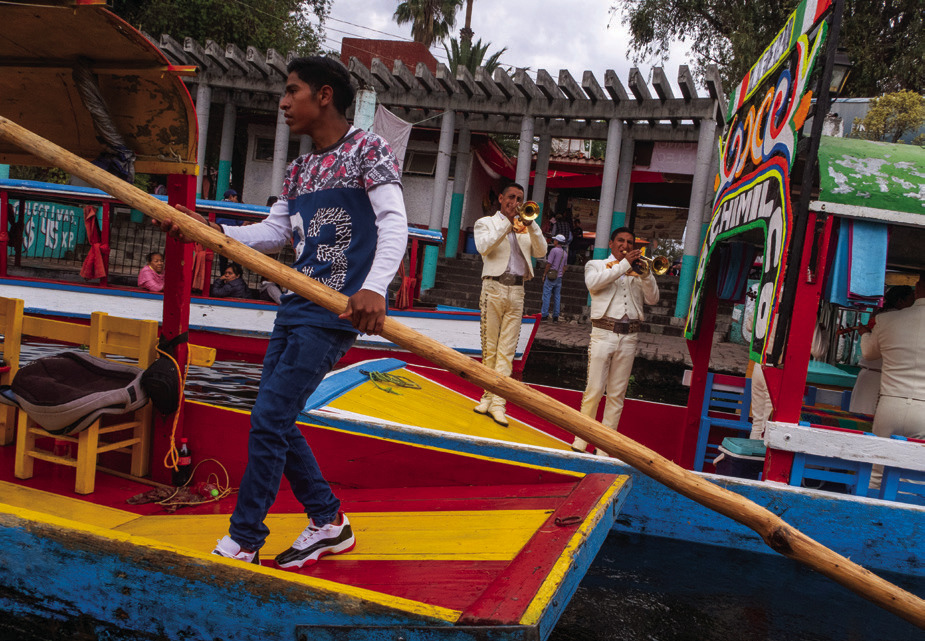
Most unforgettable for me were the “floating gardens”--canals and islands constructed in the 14th century by Aztecs in what is now the Mexico City district Xochimilco.
With limited knowledge of Central Mexico, I had never heard of the isles, originally designed to grow crops. Today, floral nurseries and other businesses dot the islands--made accessible by dozens of brightly painted gondolas, traveling so close together that merchants and mariachi bands simply step from boat to boat.
We discovered perhaps our favorite restaurant of the trip (tough call) in Mexico City: Café de Tacuba, established decades ago inside a 17th century mansion—its paintings still gracing the walls. The bustling two-story restaurant is at once elegant and casual, with its towering ceilings, pretty tilework, sunny skylights and ‘30s-style waitresses sport- ing oversized hair bows. The chicken enchiladas were primo, and the prices incredibly affordable.
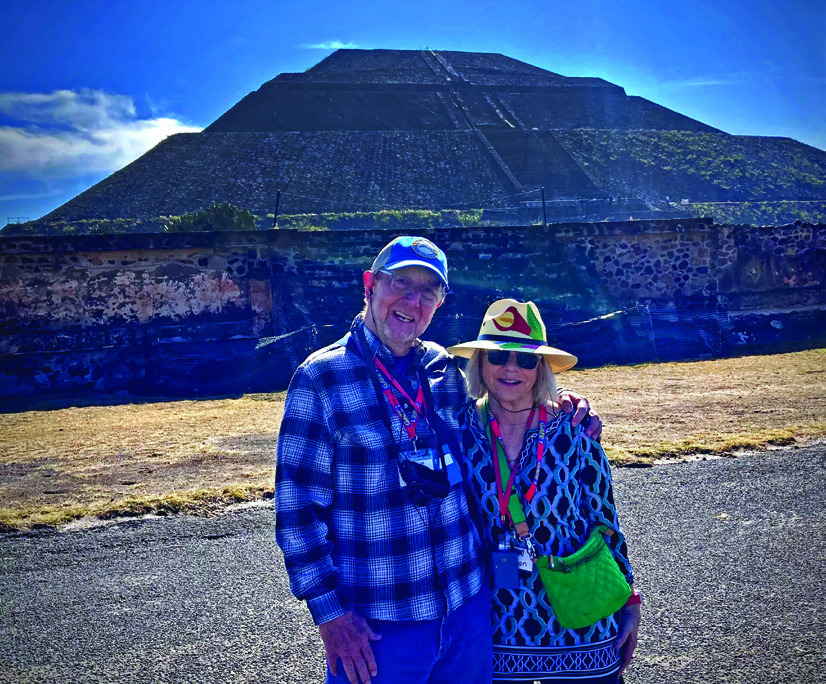
Next, we were off to the archaeological site of Teotihuacán, known as the City of the Gods, which was built 2,000 years ago by people predating the Aztecs. Excavation of the vast monuments, buried through the millennia underneath grassy hills, has been ongoing since the late 1800s—thus preserving the 4,500-acre village, breathtaking in its enormity.
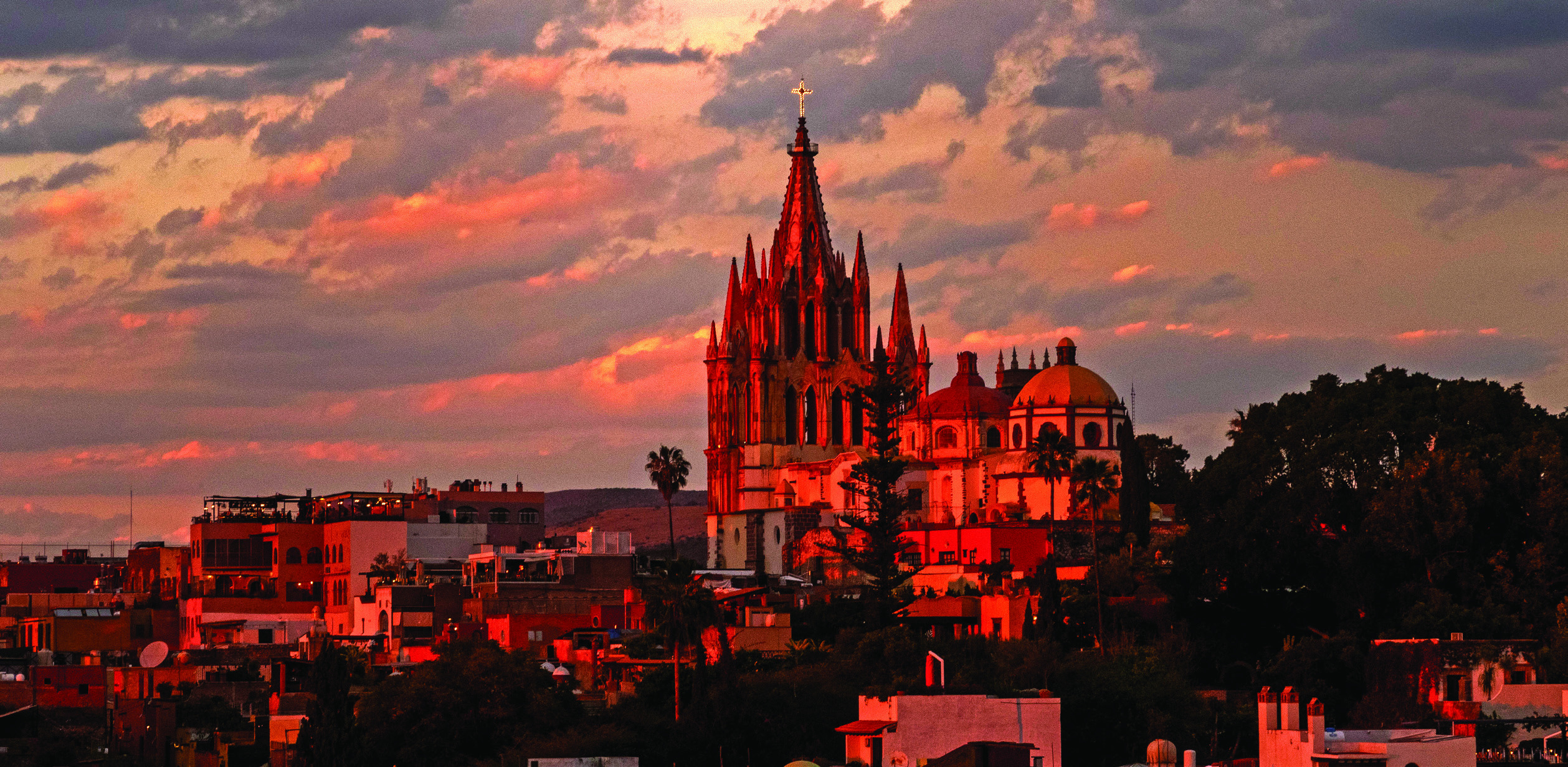
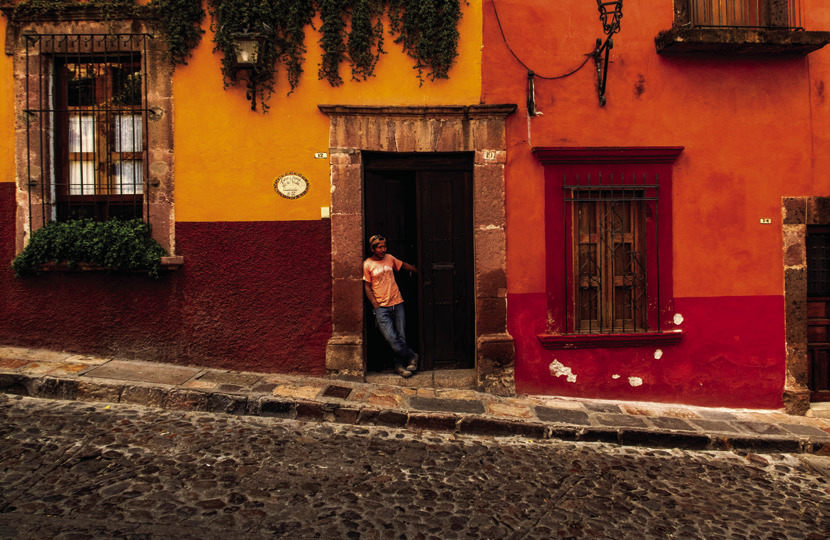
Onward to deservedly ballyhooed San Miguel de Allende. No wonder expats from the U.S. and beyond flock to this gorgeous city, revered for its galleries and folk art. Laidback San Miguel de Allende is quaint, pristine and wholly delightful.
We made the most of our one full day there, kicking it off with a guided walking tour along the cobblestone streets. Then we and our travel companions, Gary and Meg, proceeded to city-gaze from one rooftop after another--starting with lunch at Restaurante Cielo, which directly overlooks the ornate Templo de San Francisco church. I ordered well with my chicken mole.
Later, we sipped sunset drinks at Luna, taking in an extraordinary panoramic view. And then we dinnered at Quince, which, again, offers a closeup look at Templo de San Franciso as well as a highwire act.
In between meals, Meg and I poked around shops while our husbands patiently lurked. Mexican décor melts my heart. I wished I’d brought an extra suitcase.
Onward to a day in charming Guanajuato. Sure, it has treelined plazas, good eats and cute alleyways. Still, the most striking feature of Guanajuato is its rather bizarre underground street system.
Originally dug to control flooding, the long tunnels now control surface traffic. Drivers, like subway riders, commute in the dark.
We spent two nights in Morelia, mostly as a waystation--although the beguiling town deserves so much more. However, our day in nearby indigenous villages proved every bit as worthwhile. Each village specializes in a craft—be it pottery, basketry or textile weaving.
I will never forget the 500-year-old image of Christ resting inside a glass coffin at a church in Tzintzuntzan. Legend has it that the revered wax figure is gradually growing, so much so that the casket eventually required an add-on to accommodate Jesus’ feet. Once a year, on Good Friday, the statue is tied to a cross and paraded through town. Yet its painted features appear to remain in remarkably good condition.
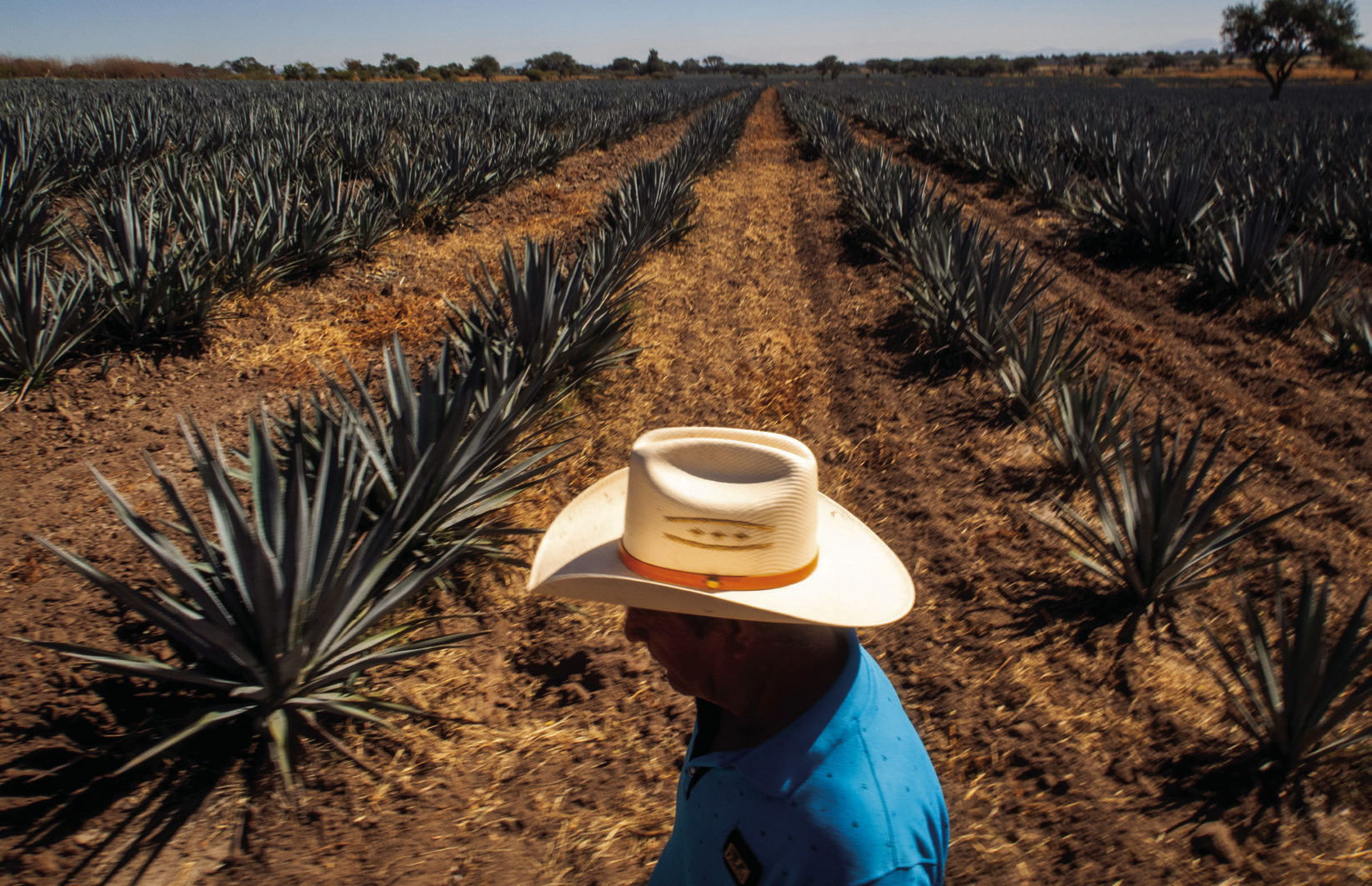
While driving to Guadalajara, our tour group dropped by a scenic blue agave farm, where its longtime owner treated us to tequila shots and snacks of homemade cheese and jicama. Did you know that, to be called such, tequila must be made strictly from blue agave grown only in a handful of Mexican states? Otherwise, the liquor is mezcal, made from many types of agave.
Guadalajara offered our favorite hotel of the trip, converted mansion Hotel de Morales. It also presented us with the most jaw-dropping mural yet, painted on the dome of the government palace by Jose Clemente Orozco.
The early 20th century artist was so fascinated by fire that he damaged his left hand and later an eye in pyrotechnic experiments—yet persisted. With unsettling and, yes, fiery images, Orozco’s monumental mural tells the story of the Mexican independence movement.
Later, we strolled Tlaquepaque, an elegant artists’ village with vibrant public sculptures, galleries, shops and sidewalk cafes. Again, why didn’t I bring a spare suitcase? Oh, and clean out my savings account while I was at it?
Bidding Mexico farewell, I promised to return to the heart of the country. There’s so much more to see.