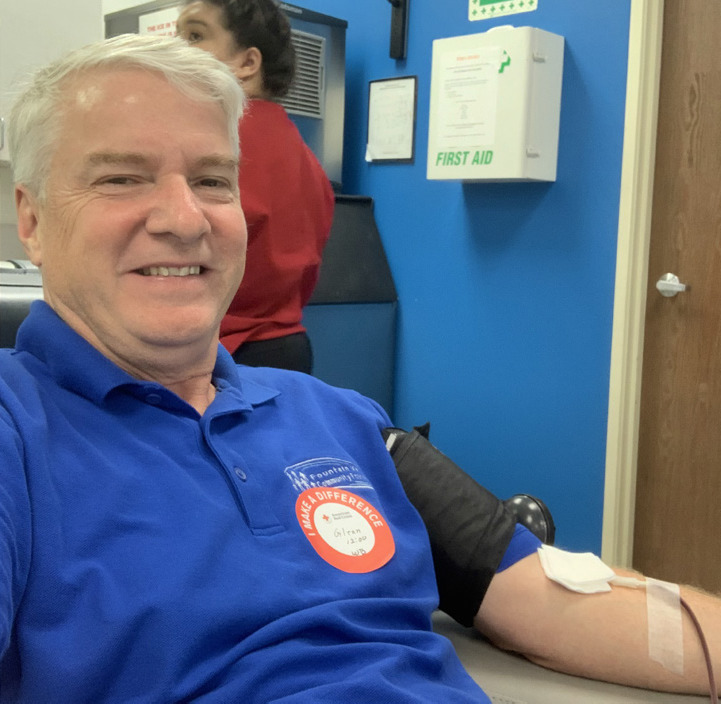
Glenn Grandis didn’t need to hear about the current national blood shortage to roll up his sleeve. The Fountain Valley City Council member and longtime resident has been donating blood at the FV Red Cross Blood Donation Center like clockwork for years.
While all blood types are in demand, his O-negative blood — the universal donor type, which can be given to any patient — combined with a CMV-negative status makes him especially sought after. (CMV is a common herpes virus carried without symptoms by most adults.)
“My donations are exclusively reserved for preemie babies who need safe, lifesaving transfusions in their very first moments,” Grandis said.
In late July, the American Red Cross declared a national blood supply crisis — only the second in its history — after blood donations fell to a four-year summer low, even as hospital demand grew. The organization now has less than a day’s supply of type O-positive blood, the country’s most commonly transfused type.
Hot weather has long threatened blood supply, with increased outdoor activity leading to a spike in serious injuries. Fewer blood drives and vacationing donors also cause the well to dry up quickly.
But this summer’s extreme temperatures, wildfires, poor air quality, and foodborne illnesses made the seasonal dip extra brutal, according to Red Cross officials.
“Under these conditions, donating blood may not be on the top of people’s minds,” American Red Cross spokeswoman Christine Welch said. “However, the need for blood is constant. Red blood cells have a shelf life of 42 days, and platelets have a shelf life of only five days, so the supply must constantly be replenished.”
Plenty of Huntington Beach and Fountain Valley residents were answering the call before it was even uttered.
For some, giving blood is another way of giving back. Donating takes only a little time and a willingness to show up.
“It takes less than 30 minutes. You can see the journey of your blood on the Red Cross app, and it truly is a good feeling when it’s reached a hospital,” Maureen Budd Neer said.
Beyond a blood draw, residents can donate platelets — a longer procedure often used to treat cancer and trauma patients.
“It’s hard — you have to sit there for two hours perfectly still with a needle in each arm,” Charlie Ridge said. “That’s when I remind myself that I would much rather be on this side of the situation than on the receiving end.”
Others said a family legacy encourages them to continue with their donations.
“I grew up watching my dad donate blood and earning blood donor pins. He proudly displayed them at our home. He’s not with us anymore, so I’m filling his shoes. It’s my pleasure,” Dee Cal said.
And sometimes, residents start small before finding a reason to continue giving.
“I first started donating for the swag — Angels or Ducks tickets, gift cards. Then I just continued,” Andrew Wilson said. “I’m CMV-negative, so my blood often goes to babies.”
“Knowing that I am helping the weakest of little human beings is all the reward I need,” Wilson added.
To schedule a donation at a nearby location, call the American Red Cross at 800-733-2767.
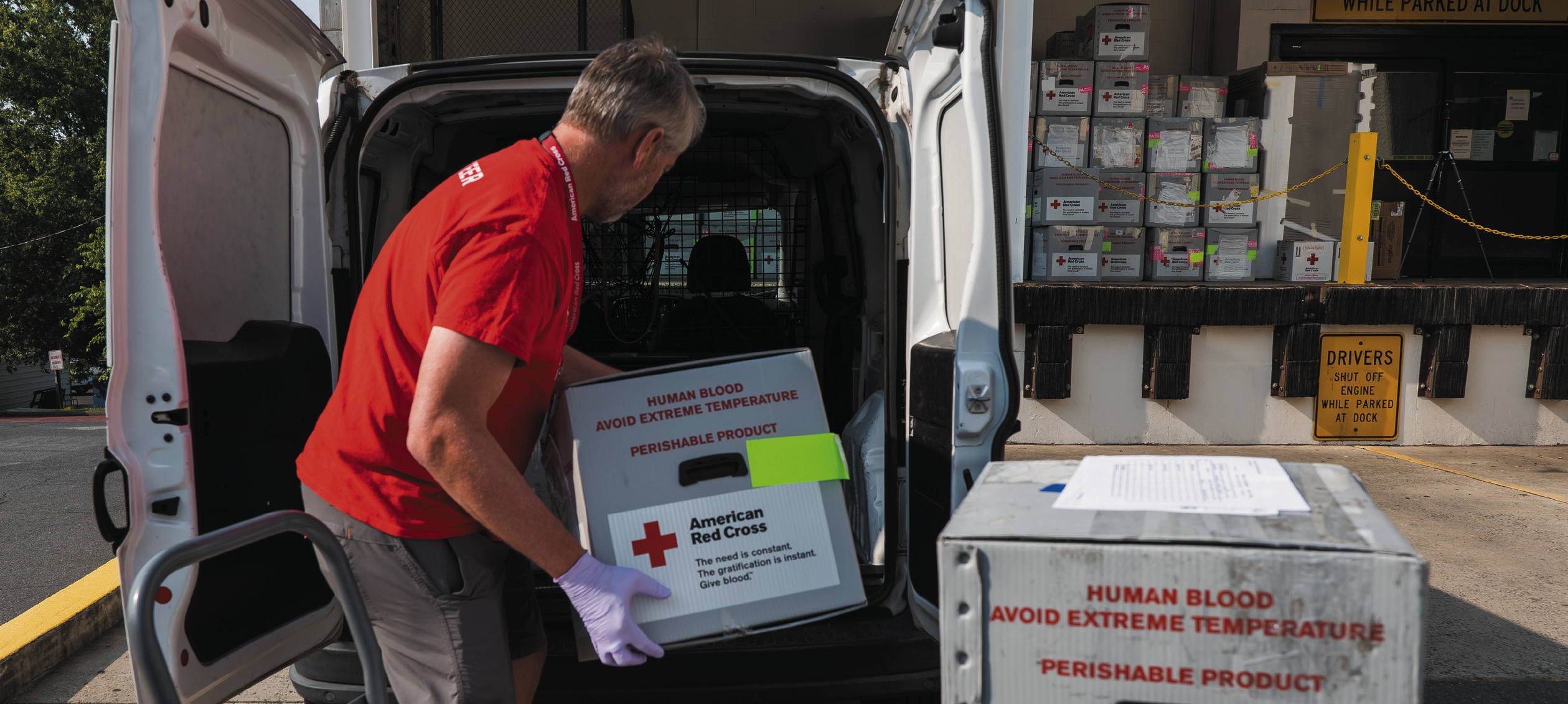
Photo by © The American National Red Cross 2023.