In the late 1800s, the inland side of Pacific Coast Highway was a sprawling 3,000-acre marshland. This coastal wetland supported a rich variety of flora and fauna, all adapted to the area’s unique estuarine coastal geography.
The ecosystem once featured intertidal salt marshes, sand dunes, mudflats and bays – teeming with wildlife such as mammals, migratory birds, fish and marine life.
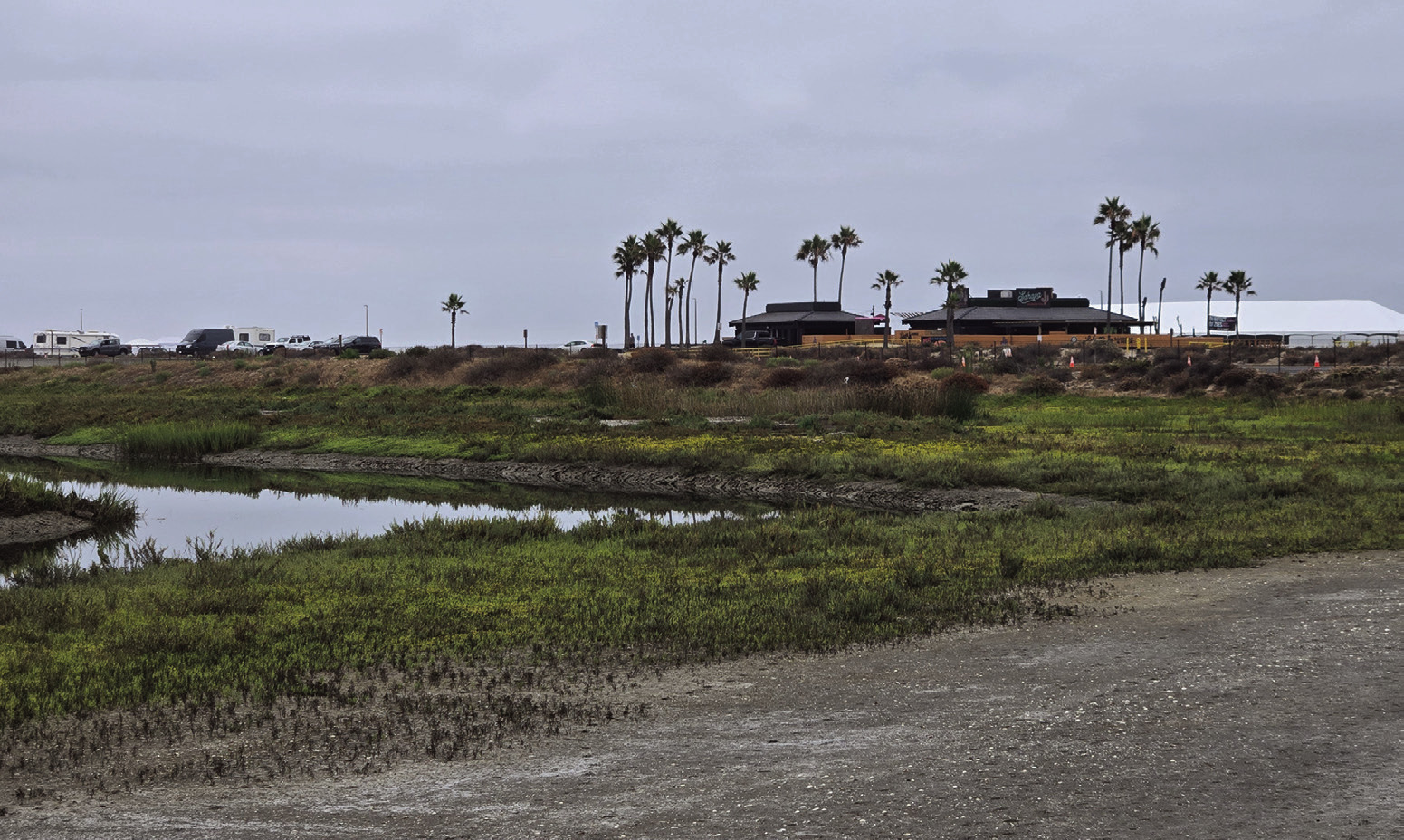
Today, only about 180-190 acres of the Huntington Beach Wetlands remain. The Huntington Beach Wetlands Conservancy, a nonprofit organization, has taken the lead in restoring and managing these intertidal marshes and mudflats.
Four marshes – Brookhurst, Talbert, Magnolia and Newland – are either completed or near completion. Their return to a natural state is considered one California’s most successful saltwater marsh restoration efforts.
The Newland Marsh, a 44-acre area acquired by the Conservancy in 2021, is the final marsh still undergoing restoration. It is divided into two parcels by the Huntington Beach Channel.
Full restoration is expected by the end of 2027, according to Executive Director John Villa. The timeline is impacted by the need to secure approvals from seven different permitting agencies, including the Coastal Commission. Restoration work also pauses during species nesting seasons.
In 2010, with the help of state grants, the Conservancy opened an Interpretive Center at 21900 PCH. The Center is open from 10 a.m. - 2 p.m. on Wednesdays and the 2nd and 4th Saturdays of the month.
To make an appointment, call (714) 536-0141