
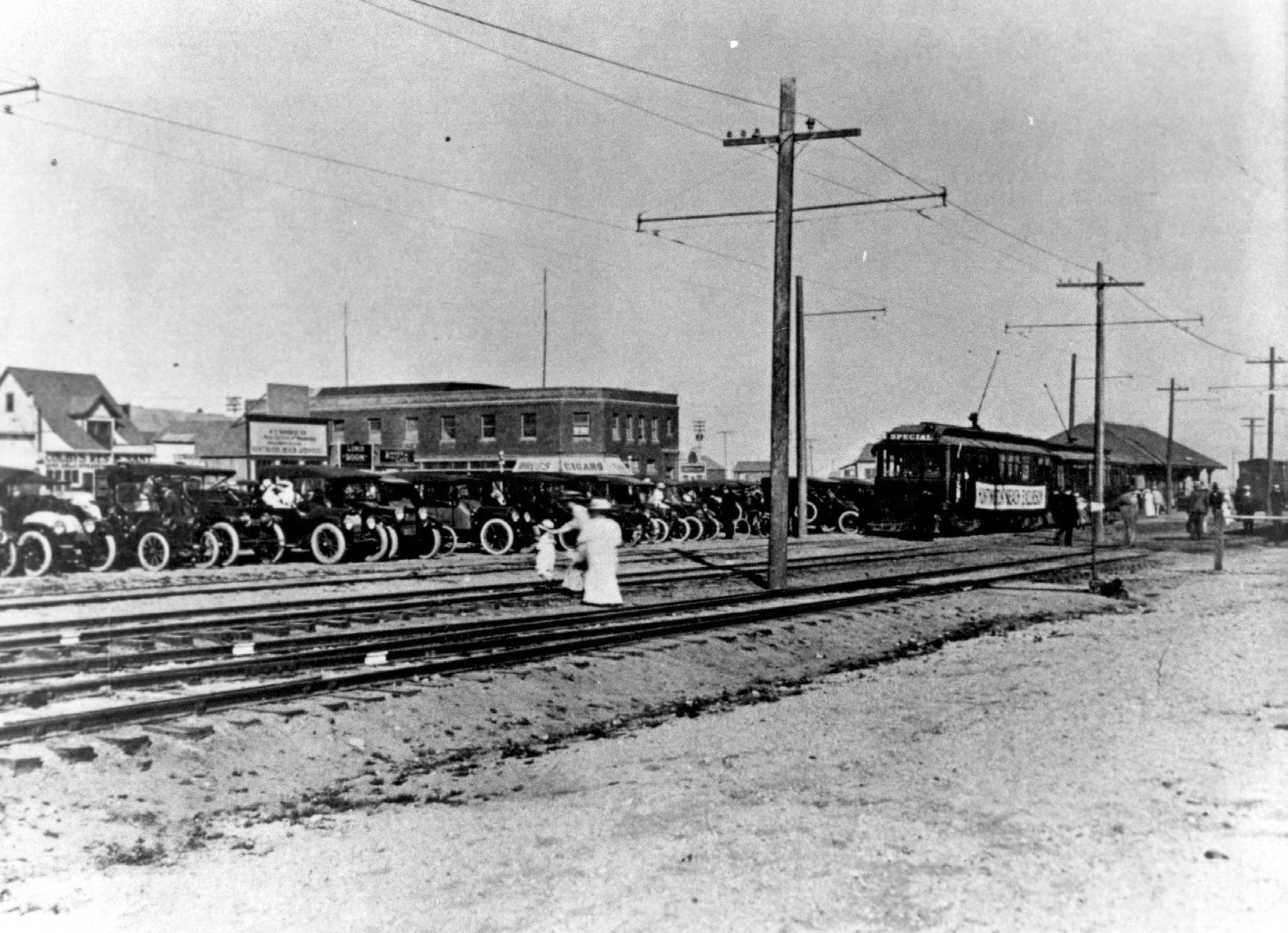
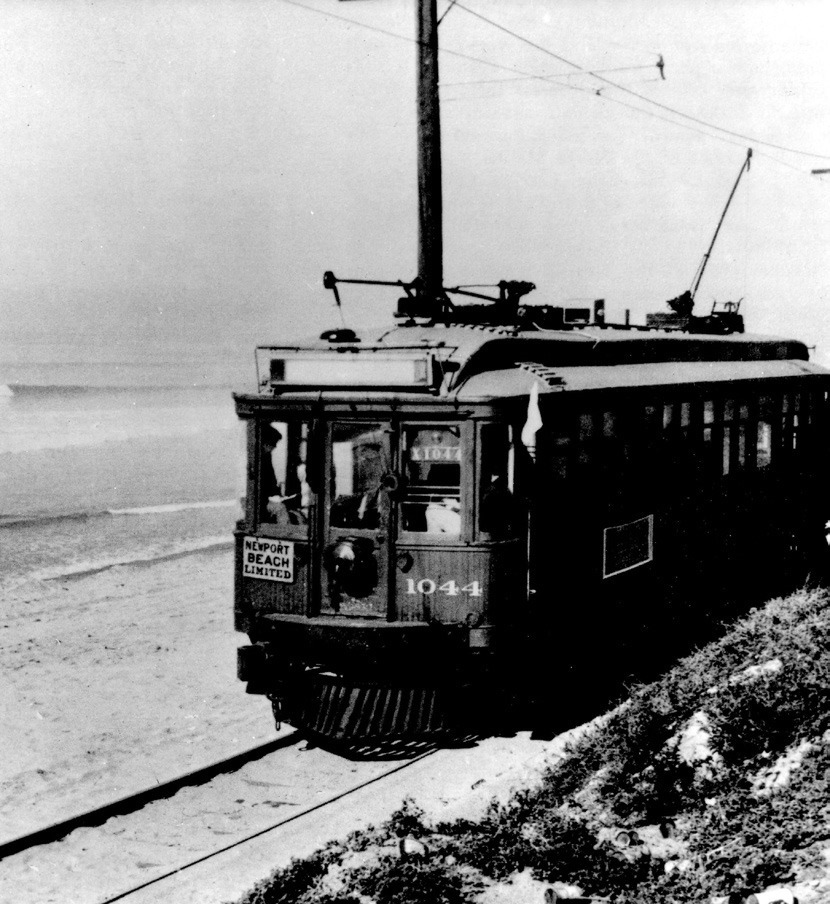
In the early 20th century, the vibrant red cars of the Pacific Electric Railway, commonly known as the “Red Cars,” became a symbol of convenience and connectivity in Southern California.
This vast electric streetcar system spanned more than 1,100 miles at its peak, facilitating daily commutes and serving as a lifeline for communities across the region. It also played a crucial role in promoting tourism and real estate in emerging coastal communities, including the burgeoning seaside destination of Huntington Beach.
Henry E. Huntington, a prominent railroad magnate and visionary, played a crucial role in developing the Red Car system. His ambitious plans included not only expanding public transit but also promoting the coastal community of Huntington Beach as a prime location for tourism and real estate investment. By providing direct access to the beach, the Red Cars significantly increased the flow of visitors looking to escape the urban landscape of Los Angeles. With services running regularly, tourists could hop on a Red Car to enjoy sun-soaked days and recreational activities along the sandy shores.
The strategic marketing of the Red Cars highlighted Huntington Beach’s attractions, showcasing its beautiful coastline, thriving community, and burgeoning real estate opportunities. Advertising campaigns for the railway often touted the ease of travel, beckoning families and individuals to experience the vibrant beach living lifestyle. As a result, more people were enticed to explore the area, leading to a boom in tourism that helped propel Huntington Beach into a flourishing community.
In addition to its appeal as a tourist destination, the Red Cars facilitated the growth of the real estate market in Huntington Beach. Developers capitalized on the accessibility provided by the railway, building homes and businesses that catered to the influx of new residents and visitors.
Properties situated near Red Car stops became highly sought after, symbolizing a desirable lifestyle anchored by beach proximity and easy access to Los Angeles.
At their height, the Red Cars connected a vast network of communities throughout Southern California, serving as a lifeline for residents and tourists alike. The system boasted significant ridership, especially during the post-World War II era when upward of 300,000 rides were taken daily. The ability to traverse great distances without the constraints of car ownership allowed Southern Californians to explore previously unreachable destinations along the coast.
Despite their rapid decline in the following decades, the legacy of the Red Cars remains an important chapter in the history of Southern California’s transportation and urban development. Their role in promoting tourism and real estate in Huntington Beach and the surrounding region highlights how innovative transit solutions can shape vibrant communities. Today, the memories of the Red Cars are a cherished part of the area’s rich historical tapestry — and a symbol of a time when public transit connected a region.