
WWII Veteran and Former HB Lifeguard Jim Tucker Pays a Visit to Lifeguard Headquarters

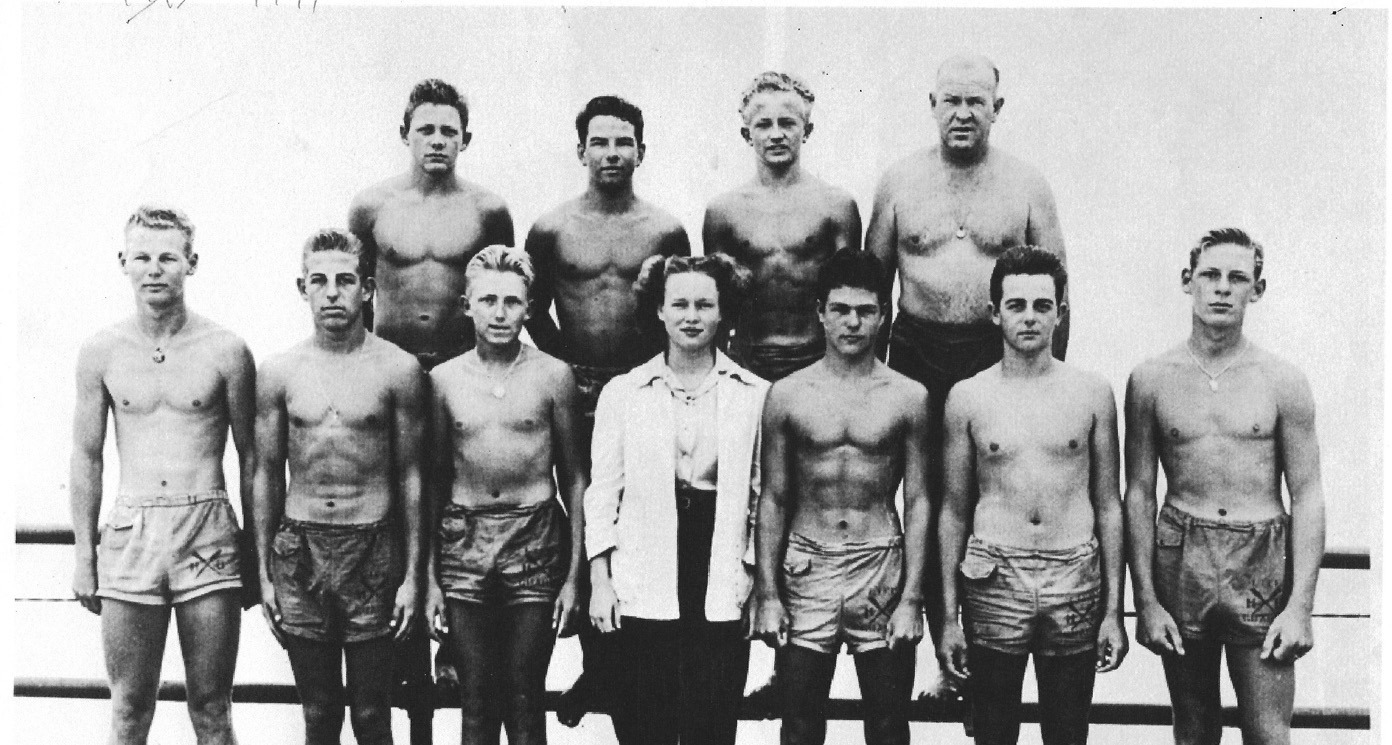
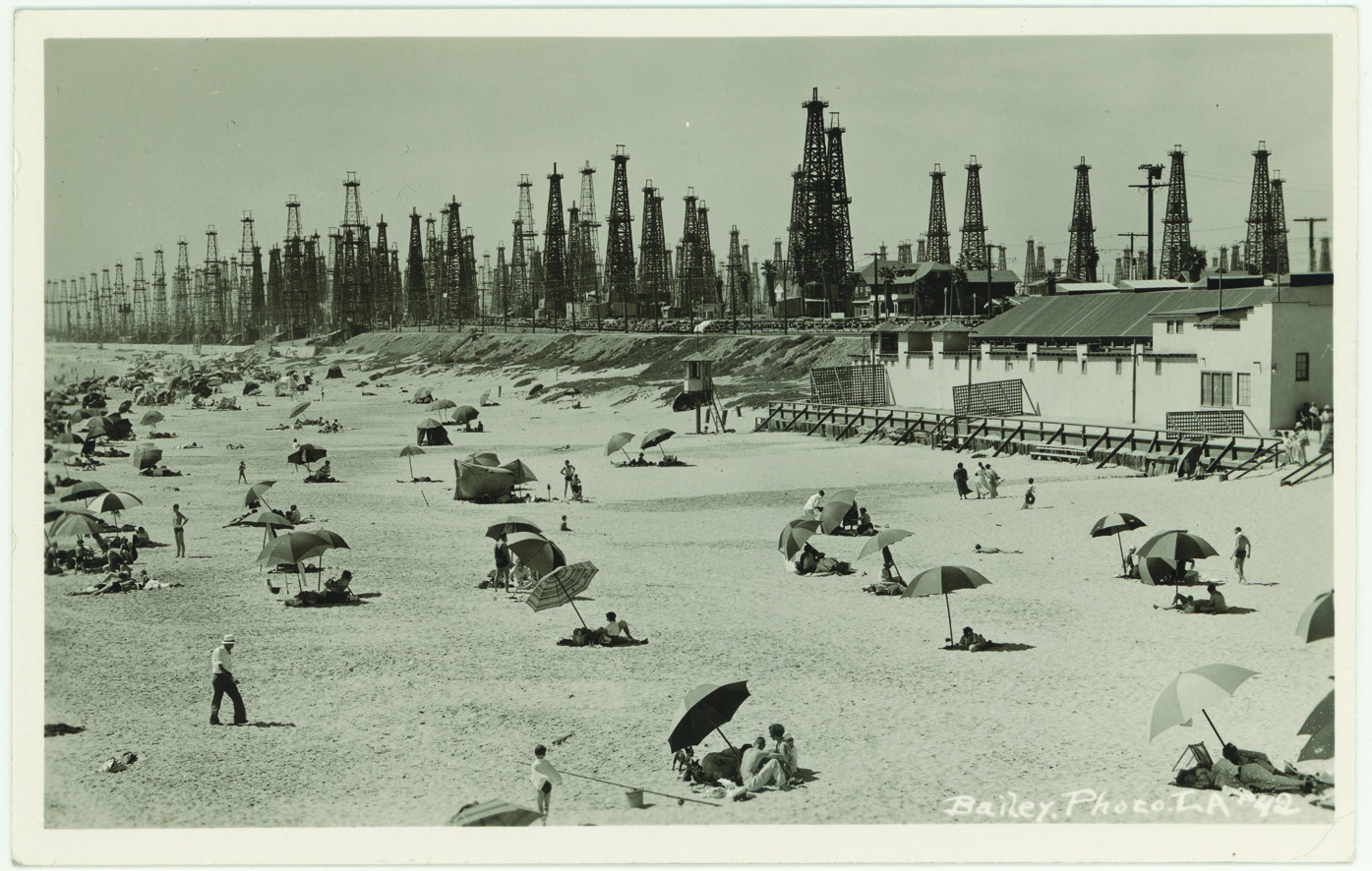
Huntington Beach Lifeguard Headquarters recently welcomed former lifeguard and World War II veteran Jim Tucker, who now lives in Northern California.
He brought with him dozens of memories about early lifeguarding in Surf City.
Now 97, Tucker is a 1945 graduate of Huntington Beach High School. He served as a lifeguard here in 1943 and 1944, earning $5 a day.
Tucker took a nostalgic tour, led by Marine Safety Specialist Rodolfo Nieto, of the Marine Safety headquarters and Tower Zero.
Longtime residents will probably recognize a lot of the names Tucker mentioned.
Tucker grew up at 616 Huntington St., next door to the Ciarelli family. He was good friends with Fred Swartz and Rocky Freeman.
In May of 1944, Tucker volunteered for the U.S. Navy with Buddy Combs, Richard White and a few other Huntington Beach boys.
Later that year, wearing his Navy uniform, Tucker married his Huntington Beach High sweetheart, Leora Hubbard.
Seventeen years ago, after his wife died, Tucker met Larue Moorhouse at the home of mutual friend Loui Derigo during the Fourth of July party. They remained committed companions until Moorhouse died at age 94 earlier this year.
Tucker has a large family, including five great grandkids.
During the tour of the lifeguard headquarters, Tucker recalled spending time at the Golden Bear and the Pavilion, reminiscing about the many great bands that performed there.
He also remembered the ever-present smell of HB oil.
Bud Higgins, who served as Huntington Beach lifeguard chief from 1932 to 1950-- and later was the city’s fire chief from 1950 to 1967— hired Tucker and his older brother Bob Tucker, also an excellent waterman, water polo player and lifeguard.
Higgins often boasted that the Huntington Beach lifeguards of the time saved a lot of lives and held an excellent record of zero drownings.
Growing up, thanks to his older brother, Tucker knew many of the lifeguards-- including Bob Knisely, Bob Hoyt, Bob Ross, Jack Killian and Nolan Hasson.
Tucker first jumped off the pier at age 9. As a kid, he also climbed the rope ladder from the water at the pier’s second “T,” as well as the wooden ladder from the sand. He enjoyed body surfing and belly boarding.
Tucker learned to swim at the Saltwater Plunge, as would his three children.
He vividly remembers the day a U.S. Air Force fighter plane crashed on the beach, June 27, 1943—tragically killing four children and injuring many other people.
“I was on duty, stationed at tower No. 5, when our truck with several lifeguards raced past me to an emergency toward the river jetty, about one mile south of Highway 39,” Tucker said. “Jack Cockrell was driving the truck.”
The P-38 USAAF fighter plane pilot survived the training mission from March Air Force Base. The current location is approximately Newland Street at State Beach.
Among Tucker’s other recollections: “The beach was much different back then. There was much less sand. The shoreline was much closer to the base of the pier.
“And, obviously, back then we had a lot less people.
“Lifeguard headquarters was on the pier at the first ‘T’ and over water. We called the towers on the sand ‘bird cages.’ Today, the HB pier’s first ‘T’ is over the sand, far from shore, and is home to the Kite Connection and Surf City Store and the lifeguard tower.”
Tucker also recalled the “metal torpedo can buoys” lifeguards carried.
“Running out into the surf required dropping the metal can buoy at the right time, but not too early--as Johnny Overmeyer once did and severely injured the heel of his foot,” Tucker said.
Swimming to shore from the surf during a rescue “was equally dangerous for the lifeguard, (who could get) hit in the head by the metal can buoy.”
“When returning to shore with a rescue victim, stopping to stand up, the lifeguard would release the can buoy and let it wash to shore,” Tucker added.
After the war, Tucker had several jobs--including delivering milk for a local dairy, working at the post office, ushering at the Surf Theatre (earning $1 per day), helping at HB Bowling Alley ($1 per day) and driving a school bus.
From 1951 to 1960, Tucker worked part-time as the weekend night guard at State Beach. He was good friends with Bob Isenor, the first full-time Cali fornia State Parks lifeguard.
In 1960, Tucker was hired as the full-time lifeguard supervisor and aquatic specialist at Folsom Lake. In 1968, he became the California State Parks aquatics supervisor, Region Four.
Tucker retired in 1987 with 35 years of California State Parks service.
In 2015, just shy of his 90th birthday, Tucker jumped off the pier at a lifeguard reunion Tuckers’ reminiscences, so rich in Huntington Beach history, bring to mind the saying: “I’m not talking about the way it was, just the way it’s never gonna be again.”
Kai Weisser was an HB City junior lifeguard, Marine Safety Officer and Rescue Boat operator. He is the author of “Huntington Beach Lifeguards,” Arcadia publishing. Weisser is a life member of the HB Surf Life Saving Association.