
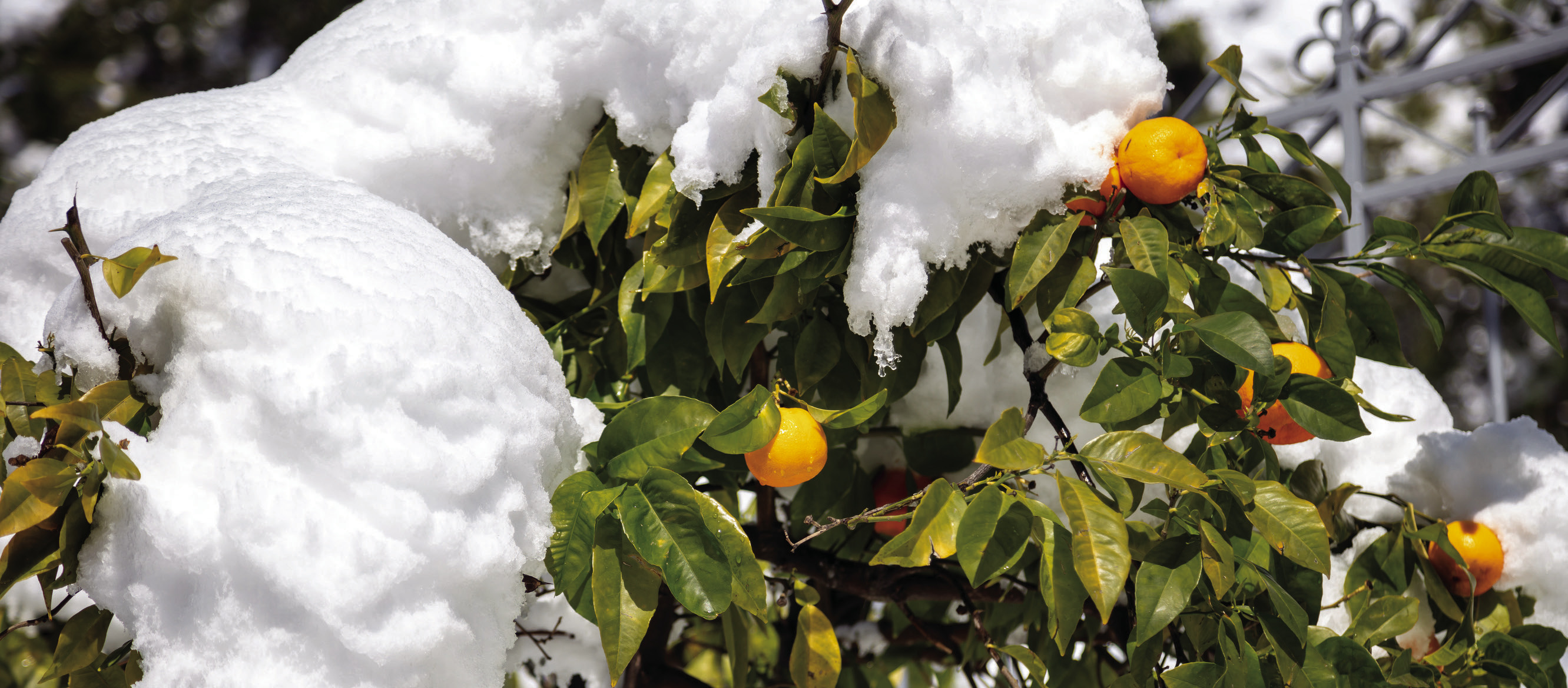
In early 2023, many Southern Californians learned for the first time that it can snow in the valleys and beach areas, with flurries reported in Costa Mesa, Fullerton, Disneyland, Riverside, and other unusual locations.
Elderly residents might remember January 1949, one of the coldest months in the region’s history, when measurable snow was reported in virtually all coastal and valley sites.
But California’s most extreme and historically significant deep freeze happened even earlier, in January 1913.
In the late 19th and early 20th centuries, citrus farming was the mainstay of the economy in Southern California, including Orange County, hence the name.
At the turn-of-the-20th century, downtowns such as Old Towne Orange and Downtown Riverside had some of the highest per capita incomes in the United States due to citrus wealth.
Southern California’s climate is almost perfect for citrus cultivation.
But outside of the urban heat island — the condition in which cities tend to be warmer than the surrounding countryside, cold winter nights occasionally result in freezing temperatures that can damage the citrus crop.
On Jan. 3, 1913, high temperatures in most Southern California towns were in the 80s. But a sudden cold front from the north arrived two days later, making Jan. 6 one of the coldest days in Southern California history.
Yorba Linda, with one of the few weather stations operating in Orange County, saw three consecutive nights in the 20s. The town’s daytime high on Jan. 6 was only 40°F.
Overnight lows were generally in the high teens to low 20s, but with much colder conditions in some isolated locations.
Mile after mile of citrus groves in Orange, Riverside, San Bernardino, and San Diego counties were decimated.
In an era before federal and state disaster aid, many agricultural businesses were forced to close permanently.
Back then, the only University of California campuses were in Northern California, most notably UC Berkeley (founded in 1868).
The freeze prompted the UC Board of Regents to open a Citrus Experiment Station in Riverside so scientists could study how to protect farmland from extreme weather. That station would become UC Riverside and would help bring research-level public higher education into the Southland.
Perhaps the most globally significant consequence of the 1913 freeze was the rise of Orange County native Richard Nixon to the U.S. presidency.
Nixon was born to Yorba Linda lemon farmers during the cold snap.
Due to the freeze, the Nixon family decided to change industries and moved to Whittier, where the future president would graduate from Whittier College in 1934, setting him on a course toward political leadership.
In today’s Southern California, we don’t have to worry about freezes the way previous generations did, since farming isn’t nearly as central to the economy as it was in yesteryear.
Still, if you have a home garden, stay alert for frost advisories and the more serious freeze warnings during the winter months, especially if you live a bit away from the heat-trapping blacktop and pavement in cities.
Water the soil around your plants the night before a freeze to help the soil retain heat. Consider putting down mulch. And you might even cover your plants with a blanket or plastic sheeting for some extra protection.